By Dr. Cyndy Jean, Associate Head of School & Interim Director of the Middle School, Hackley School
As an educator of 19 years and a lifelong learner myself, I have grown increasingly confident in my advocacy for academic freedom and for the joy that comes from engaging with new ideas and varying perspectives.
At Hackley, our theme “More, Together” reminds us that learning is not a solitary pursuit; it flourishes in community. When we explore ideas in partnership with others, we open ourselves to perspectives that help us create new meaning and deeper understanding.
Together, we are able to engage with a range of ideas that we might not have discovered on our own. In classrooms, on stages and across our playing fields, students and teachers bring their unique insights and questions to the shared work of learning, fueling curiosity and deeper meaning.
This spirit of collaboration reflects John Dewey’s belief that education is a social process, one that grows richer when we interact with others and connect learning to lived experience. Through collective inquiry and support, we not only strengthen our intellectual capacities but also nurture empathy, imagination and the ability to see the world through many lenses. In doing so, we fulfill the promise of being more, together — discovering not only more knowledge, but more connection, joy and purpose in the process of learning.
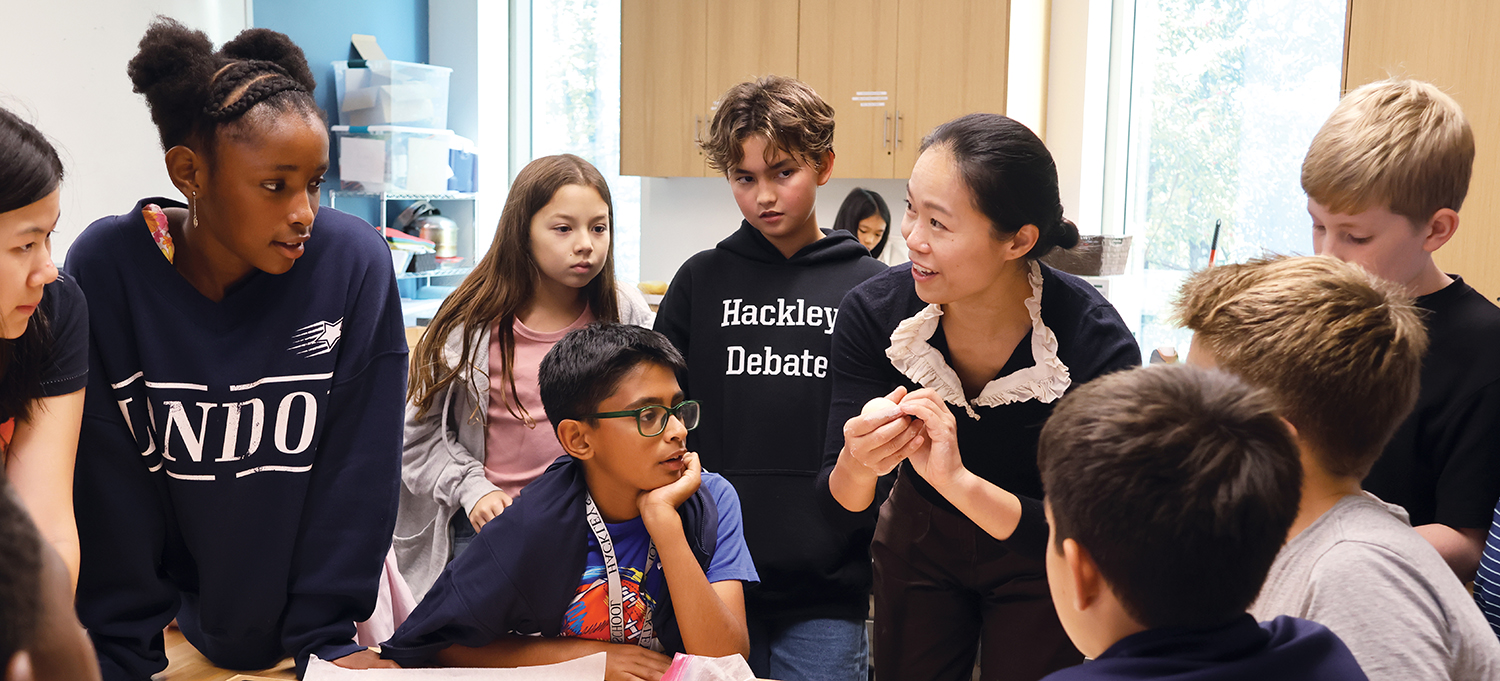
Sixth grade Chinese language students learn about the Mid-Autumn Festival with Ms. Jan.
We take tremendous pride at Hackley in the strength of our faculty. Notably, during our Open House events — which feature demonstration lessons — and Curriculum Nights when Hackley’s faculty offer prospective and current families a glimpse into what daily learning looks like on the Hilltop. One comment consistently rings out from parents after these events: “Wow, I wish I could be a student at Hackley!”
That sentiment speaks directly to the heart of our theme, “More, Together.” Our faculty elevate this idea every day through their thoughtful collaboration, willingness to share practices, and commitment to continuous learning alongside their students and one another.
In their classrooms, learning is a dynamic exchange; teachers invite students to question, experiment and build meaning together. Faculty also engage deeply with their colleagues, reflecting on how to stretch ideas further and design experiences that connect disciplines, voices and perspectives.
In addition to who our faculty are as people and professionals, it is the richness of the content that sparks curiosity and joy in classrooms from Kindergarten through Grade 12. Whether through inquiry and investigation, hands-on experiential design, or Harkness-style discussions in the humanities and Classics, Hackley students are immersed in a wide variety of ways to learn and to think. These approaches ignite conversation, deepen analytical skills, and prepare our students to become thoughtful, capable leaders in any field they pursue beyond the Hilltop.
I have the great privilege of speaking with young alumni and parents of alumni in my role as Associate Head of School, and I often hear a familiar refrain: “college feels easy.” Parents frequently share how well-prepared their children are — whether it’s their ability to advocate for their learning needs, write with clarity, or think critically and independently. It’s heartening to know that a Hackley education not only sparks a love of learning and a unique ability to work collaboratively toward a shared goal, but also cultivates the confidence and readiness students need to thrive in college and beyond.
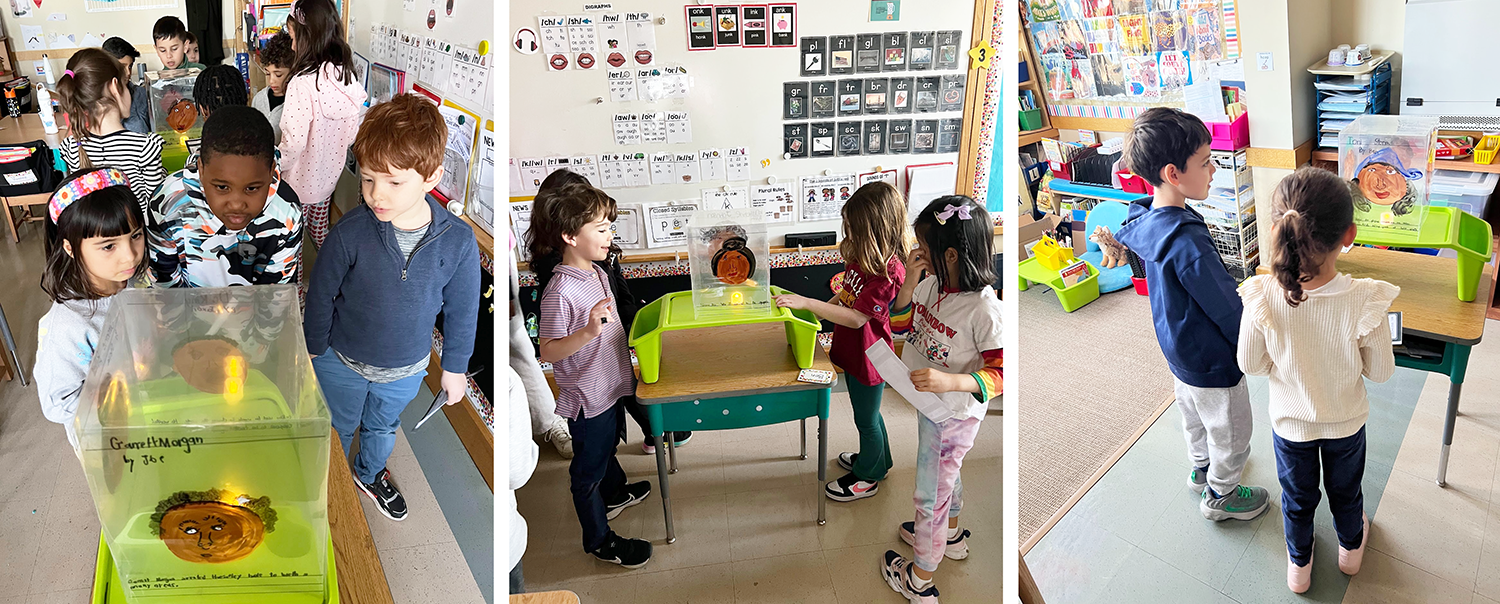
First graders in Ms. DeNino’s class engage in a Black History research project where inquiry and art come to life.
What does that learning look like in daily practice? Step into Ms. DeNino’s first grade classroom, where inquiry and art come to life through a Black History research project. Students study an artist’s approach to portraiture before trying the techniques themselves. In the true spirit of “More, Together,” they take notes, write summaries and present their work not only to classmates but also to younger kindergarten peers. In doing so, they embody the very principles of social learning, echoing Dewey’s belief that education deepens through shared experience and active engagement with others. By teaching and inspiring their younger peers, these first graders not only reinforce their own understanding but also experience the joy of building knowledge in community. This interdisciplinary lesson weaves together art, research, writing and public speaking, all within a single unit. The pride these first graders display at their publishing party is the same confidence and warmth we hope to see our graduates carry forward as they pursue higher education.
Or visit Mr. Oyama’s fifth grade science class, where students test a new water bottle design and launch Alka-Seltzer rockets to refine their lab techniques. Working in collaborative groups, they apply the engineering process to design their water bottles and use data to redesign as needed. They employ chemistry to study physical and chemical change when working on their rockets. Cheers erupt as teams launch their designs, and students diligently record data in real time, applying the scientific method with energy and focus. The attention to data-driven results, scientific inquiry, and navigating group discussions are skills we anticipate students will need as they become independent researchers in the Upper School or continue to conduct research once they graduate from Hackley.
In the Upper School, step into a Classics class with Mr. Sheppard, and you’ll see students leading the discussion — debating Latin grammar, interpreting literature and building on one another’s insights. Mr. Sheppard’s role becomes that of a guide, while students draw from their notes, textbooks and peers’ observations to deepen understanding. Many even extend their learning beyond the classroom through independent research or by serving as teaching assistants for younger students. You can imagine my joy as an educator witnessing these scholars develop tools for teaching in the classroom!
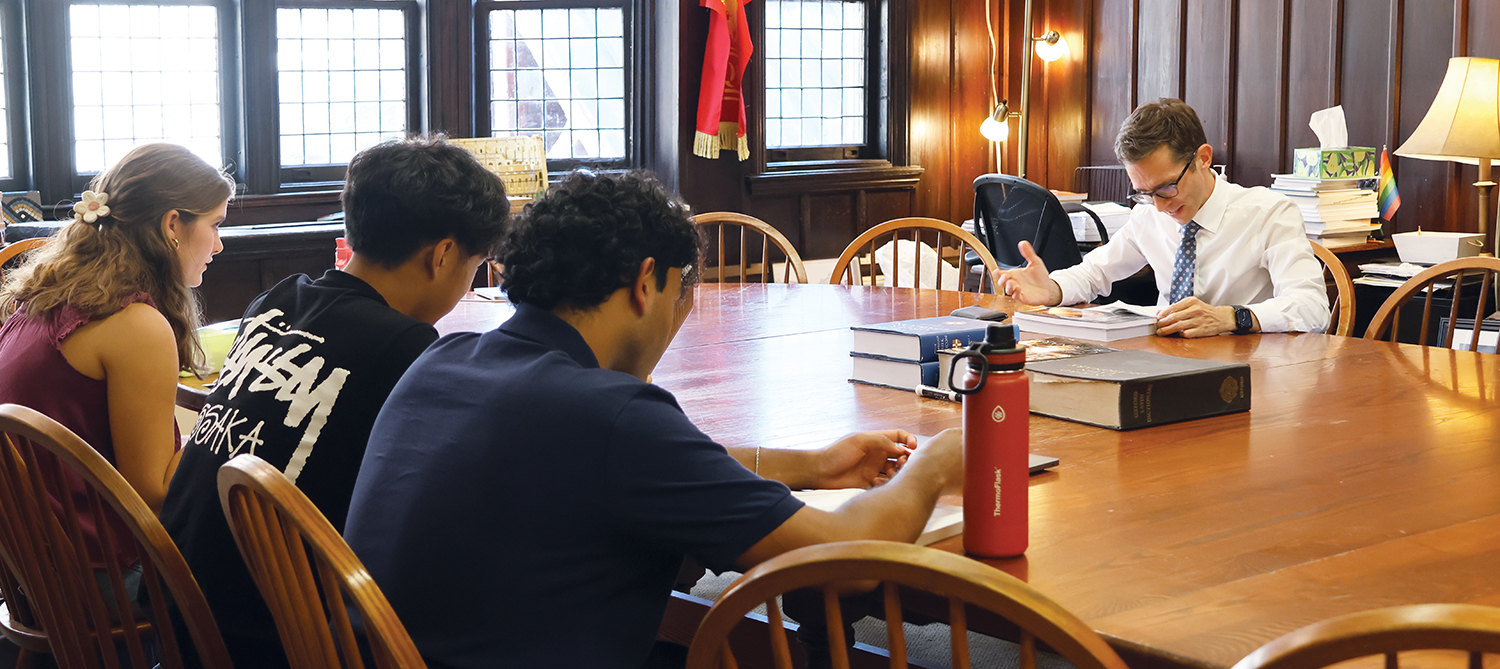
Classics students interpret literature while building on one another’s insights under the guidance of teacher and Classics Department Chair Mr. Sheppard.
Collaboration thrives through interdisciplinary projects, team teaching and shared inquiry. Students lead discussions, work in small groups, and support one another’s growth. Through these experiences, they learn to listen actively, think flexibly and build upon the ideas of others — skills that strengthen both their academic understanding and their sense of belonging.
Faculty model this same spirit of collaboration by opening their doors to invite partnerships, parent presentations and research tools that enrich learning for all. As a community, when we practice our own adult version of learning more, together, we cultivate empathy, innovation and a shared responsibility for growth. In this way, collaboration becomes not only a method of teaching and learning, but also a way of being that deepens our collective purpose and connection.
At Hackley, learning is not confined to a classroom or a single subject; it’s a community-wide pursuit of curiosity, connection, excellence and joy.
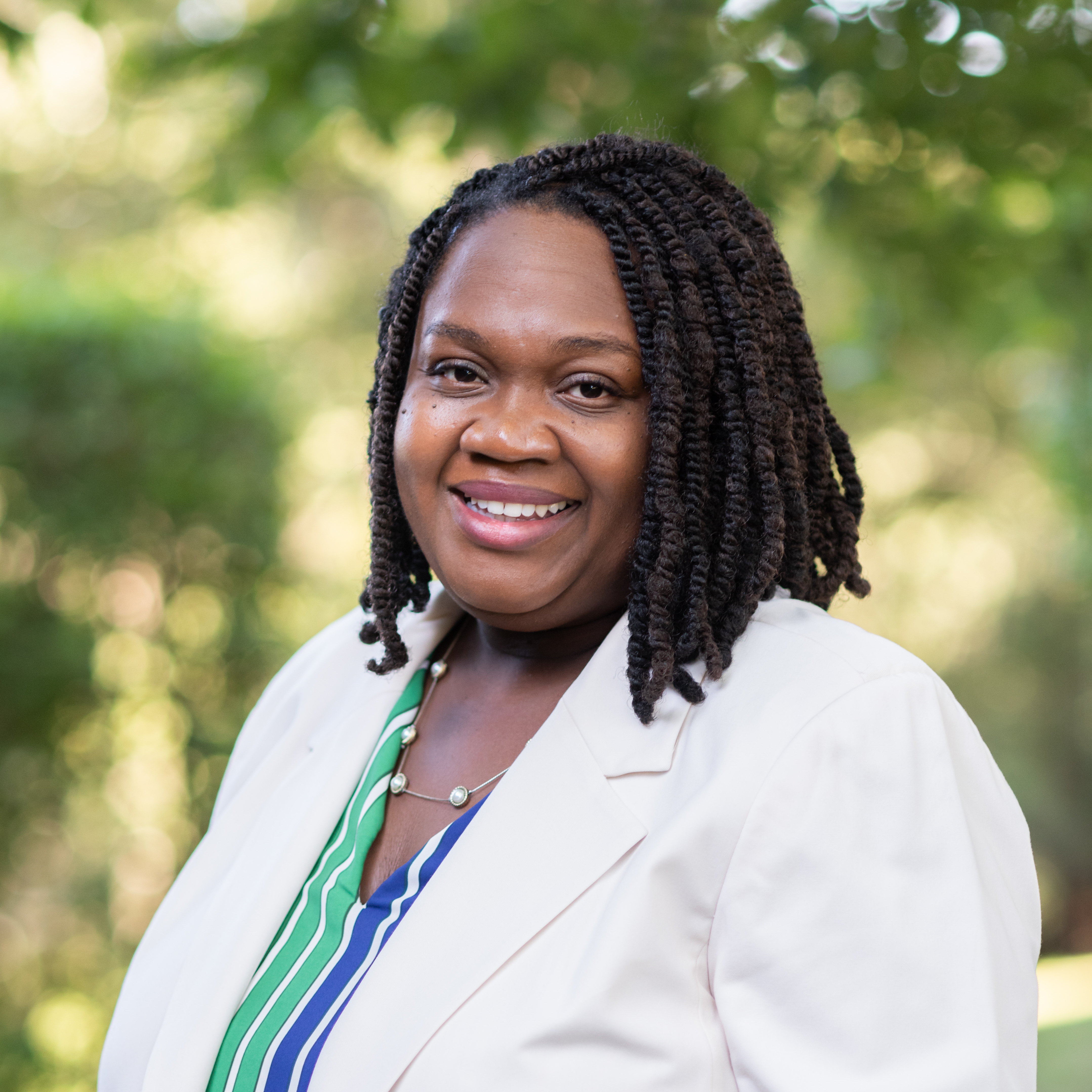
About the author: Cyndy Jean, Ed.D. P’34, ’36 is Hackley’s Associate Head of School/Interim Director of the Middle School. She earned her bachelor’s degree at Amherst College, master’s in teaching at Fordham University, master’s in education at Teachers College at Columbia University, and her doctorate from the University of Pennsylvania. Cyndy joined Hackley School as an assistant teacher and has worked as a coach, division director and grade-level dean.