By Sarah French, Production Manager and Technical Director, Hackley School
The lights dim. The noises of the audience settle into silence. The curtain opens. The show begins.
From a comfy chair in Diller Hall, it can be easy to be swept away by the talent of our students and the excitement of the show, but behind you in the booth is a team of folks who know that the show begins far before the actors set foot on stage. The production had to be designed, the sets painted, the lights cabled. The script had to be cued, and the stage manager had to give the actors their “places” call and tell the light board operator to “go” on House to Half.
Technical theatre encompasses every technical aspect of a theatrical production or event. Everything that isn’t acting or directing — scenery, lights, sound, costumes, props, movement, organization and design — falls under the umbrella of technical theatre.
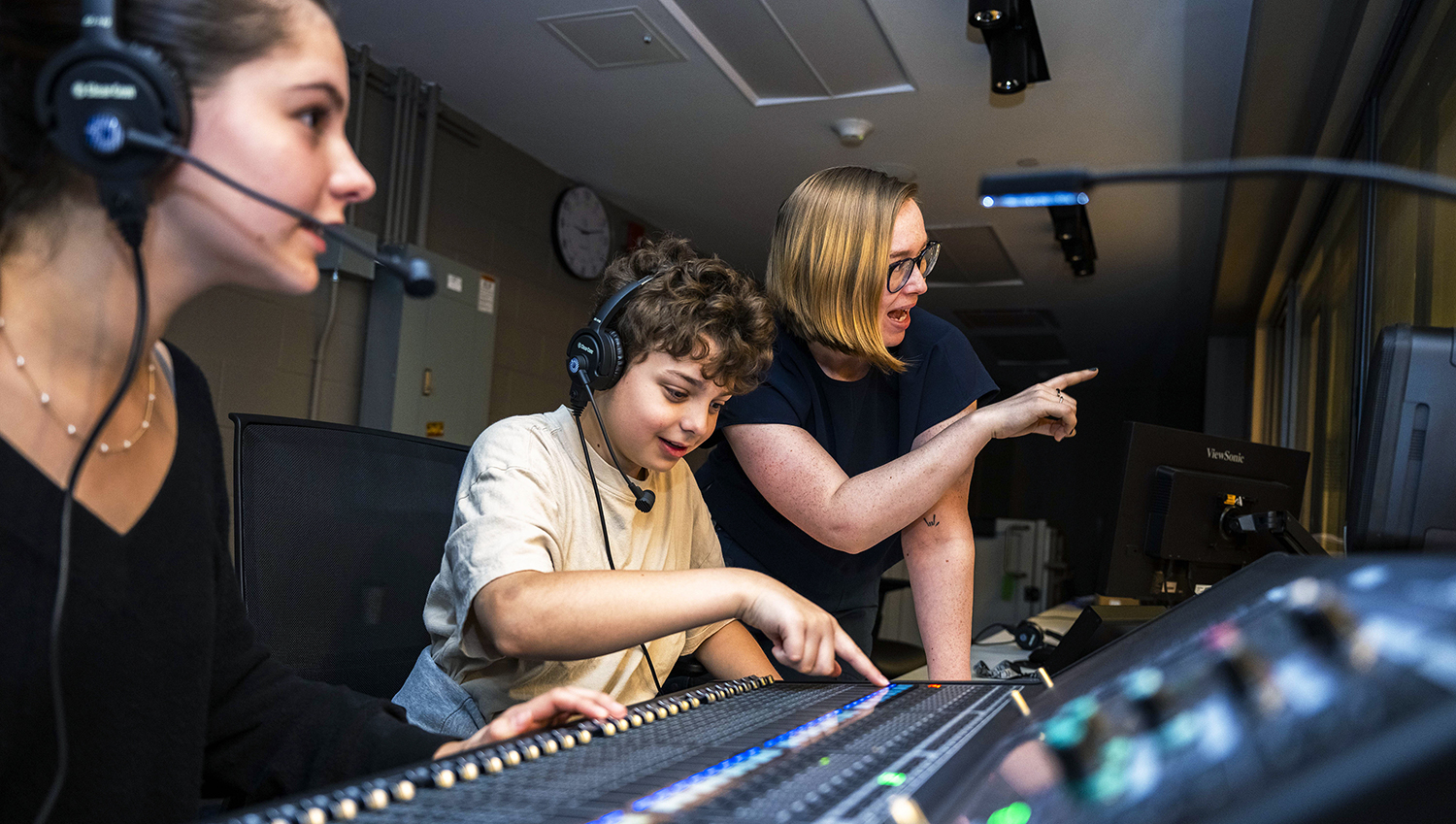
Hackley’s Production Manager and Technical Director Sarah French (right) in the Diller Hall booth with Technical Theatre Practicum students Sophia Frasco ’29 (left) and Tate W. ’31 (center).
With our performing arts programming up and running in the Allen Center for the Creative Arts and Technology for a full year, we have had the chance to begin developing technical theatre curriculum and oversee students as they take on some of the technical roles in our productions. There are opportunities for interested students, grades seven and up, to work on all of our performing arts productions. Over the past year, students have worked in every position behind the scenes — our shows have had student stage managers, stage hands, lighting operators, sound technicians, carpenters, electricians, painters and prop designers. At every assembly, there is a student in the booth picking out the lighting color and dimming the house lights when it’s time to begin.
In the technical theatre trimester of All Things Theatrical, seventh and eighth graders are learning about the fundamentals of theatre tech and then putting those skills to use, creating props for the upcoming shows and thinking critically about the design process. This trimester’s class has produced some amazing dragon eggs and hand-sewn dragon props for the fifth/sixth grade musical “Imagine a Dragon.”
Working behind the scenes is, by definition, a job that doesn’t get a lot of attention. There is a huge amount of work that goes into each production that most people are unaware of. We started planning and designing for the 2026 spring musical (“Addams Family”) this past March. I, personally, cherish my backstage anonymity, but there are some students doing amazing work in our technical theatre program who deserve their moment in the spotlight, if you will.
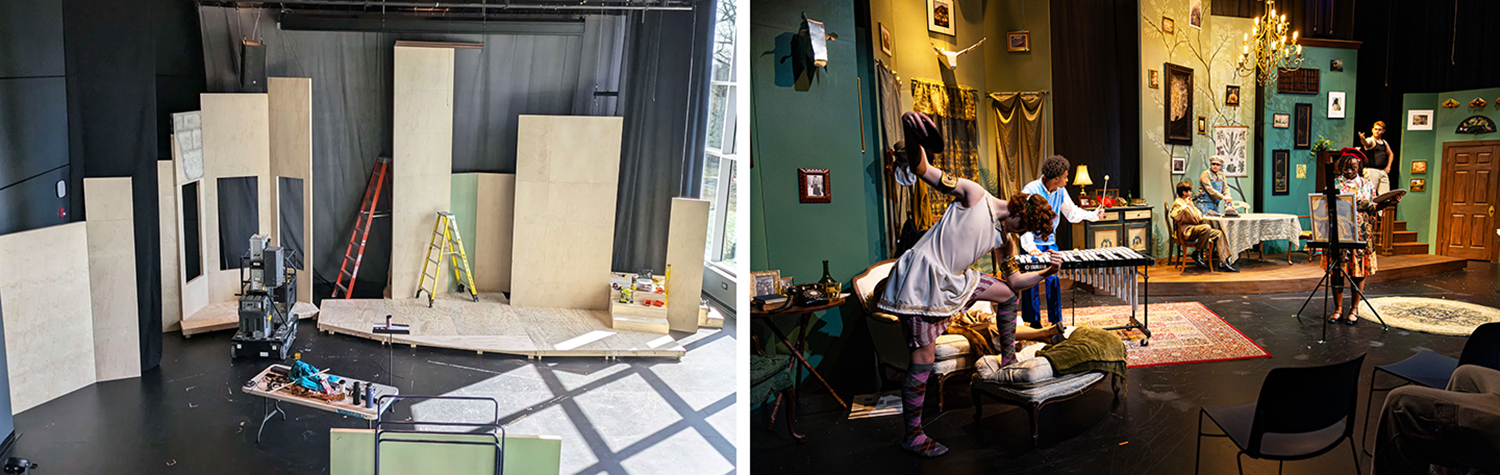
The set of last year's Upper School play "You Can't Take It With You" in the Black Box Theatre in the Allen Center for the Creative Arts and Technology.
The Acting: The Craft class, which produces the Upper School play, has a student who is in the middle of rehearsals for his second show as Production Stage Manager. We started the year with production meetings with the director and creative team as they made design decisions and worked out the specifics of special effects. Our stage manager is in rehearsals all year recording blocking, wrangling actors and taking notes about topics for our next production meeting. In preparation for the show, he will help the actors adjust to their set, manage the movement of props and scenic elements, create a cue script outlining the beats and moments in the show, and then call those cues to sound, light, and projection operators and his assistant stage manager. Giant thunder crashes, timed doorbells, fireworks explosions and snap blackouts are storytelling elements that must go off precisely in order to create the desired effect, and all of those calls are made by the stage manager in the booth.
Our three Technical Theatre Practicum students have worked in a number of different disciplines so far this year. They have assisted in hanging, focusing and cabling a new groundrow of lights in Diller Hall and a full rep plot in the Black Box. They learn the electrical and mechanical principles behind how the lights work and how they connect to each other, and then put that to action, focusing the lights for our upcoming shows. They have also helped construct the set for the fifth/sixth grade musical, carved foam to look like wooden beams, learned how to make gruesome wounds with special effects makeup for Halloween, built a stage manager’s kit, and are gaining proficiency in many scene shop tools and light board programming techniques. They will each operate three different backstage positions for our performing arts shows this year, and Sophia Frasco ’29 will be the lighting designer for our fall Coffeehouse.
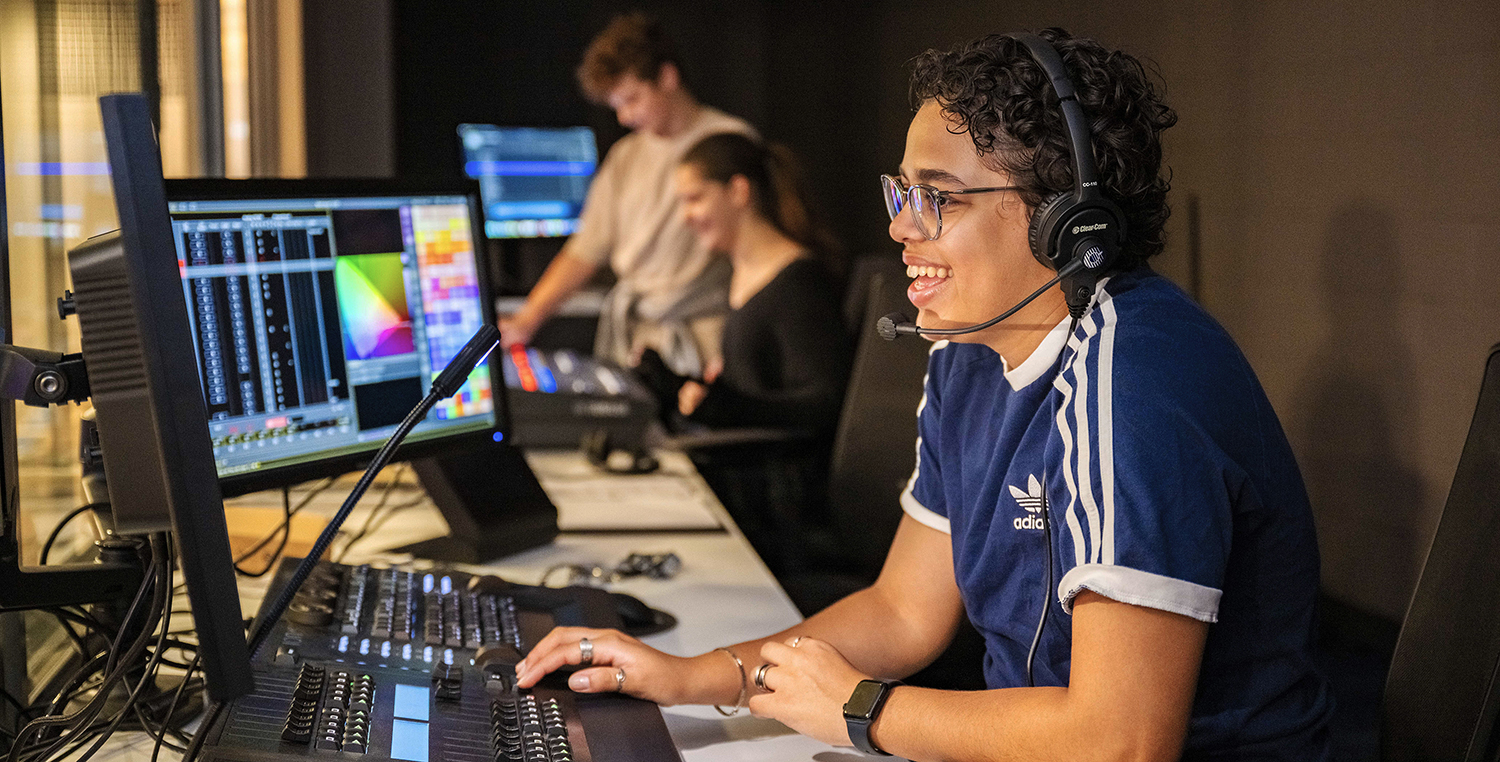
Technical Theatre Practicum student Ari Spiegel '26 (foreground), Sophia Frasco '29 and Tate W. '31 in the booth in Diller Hall.
I love the process of theatre arts. Getting stuck in a challenging scenic design or spending a day painting wood to look like a different kind of wood brings me a lot of joy and satisfaction, and I do a lot of that work alone. Sometimes it can be easy to forget that the true magic of theatre happens when people come together. At the root of every theatrical production is a group of people coming together to tell a story. If you get me talking about theatre long enough, you will hear me wax poetic about collaborative storytelling, but I truly think it’s the most important thing we do as humans.
We champion theatre education because it fosters empathy and community, teaches strong communication and collaboration, and helps people grow their confidence and sense of identity. This is just as true offstage as it is on — our technical theatre students are thinking critically about the decisions we make as we frame the story, making quick calls during the run-of-show and communicating them over headsets to their fellow technicians, and learning how to work in a team toward a shared product and goal.
The author Terry Pratchett wrote in one of his books, “it’s still magic, even if you know how it’s done.” Giving our technical theatre and acting students a glimpse into the production process strengthens their understanding of the creation of a show and how all the disparate parts come together in service of the story. It has been a great joy to share the magic of technical theatre with our students over the last year, and I’m so excited to see the program grow and expand into our beautiful new home.
By continuing to tell stories in collaboration, bring new worlds to life on stage, and expand our understanding of theatre and storytelling, we can create more, together.
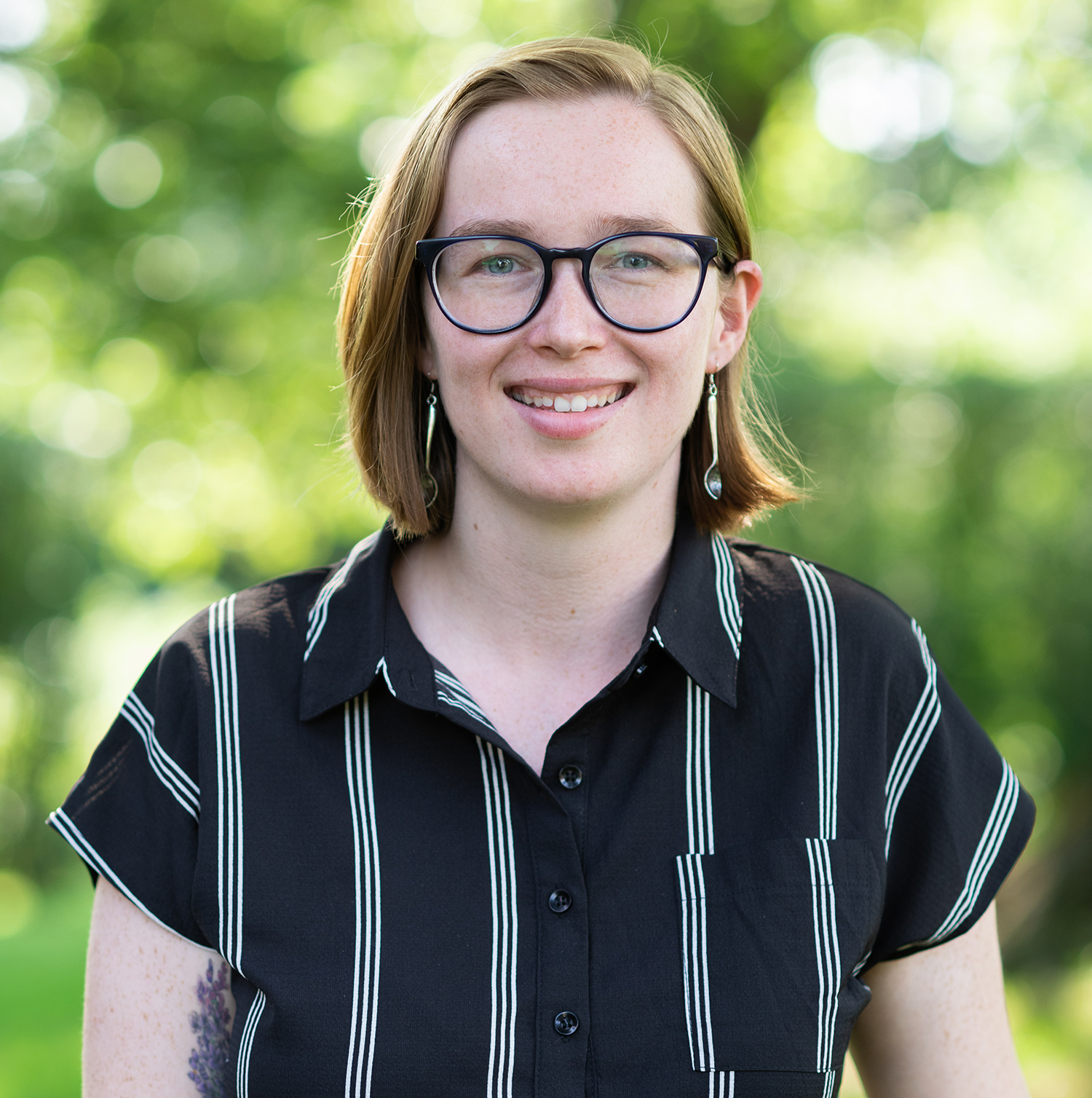
About the author: Sarah French is the production manager and technical director for the Performing Arts Department at Hackley. Before coming to the Hilltop, they worked in professional theatre as a technician, designer and tech director on community, regional and off-Broadway productions, and also taught technical theatre after-school programs. When not hanging from the catwalks or elbow-deep in paint, Sarah can be found reading science fiction, running D&D games and winning trivia nights. They invite you to come see this year’s shows: the fifth/sixth grade musical “Imagine a Dragon” (Nov. 13–15), Upper School play “Anon(ymous)” (Jan. 29-Feb. 1) and the Upper School musical “Addams Family” (March 11–14).