Hackley School
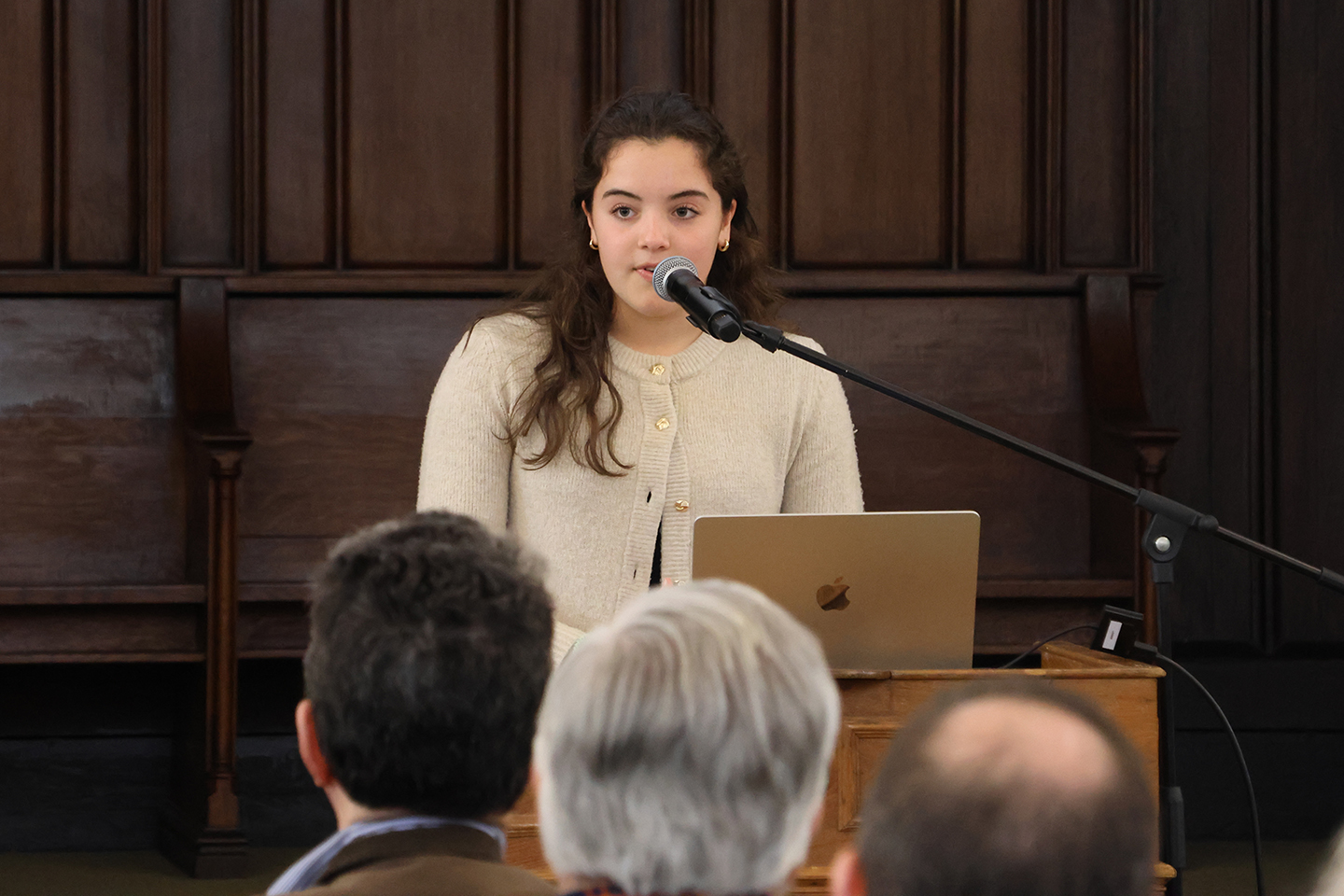 Hackley fosters a culture where students are empowered to pursue their passions — on the field, in the classroom and through independent inquiry. For senior Annika Duggan, that passion centers on service learning and social impact. With the support of Director of Community Engagement & Service-Learning Emily DeMarchena, Annika has spent the past several years designing and refining an independent study that has allowed her to dive deeper into disability awareness and advocacy.
Annika first started on this academic journey when she took Ms. DeMarchena’s Service Leadership for Social Impact class as a sophomore. “Annika was already an advocate and an activist,” DeMarchena notes. “It’s just something that’s in her DNA, so it was an easy choice for her to take that class. And then coming out of that, she really wanted to commit to disability awareness and advocacy. So, we decided that the best way to attack this was with learning and growing everyone’s understanding of what this is — students and faculty. She was really set from the beginning that this would be something that would be for students and adults. And she was really committed to leaving this as a legacy project.”
Last year was spent investigating, researching, reading, watching movies and documentaries, learning from experts, and consuming information. “Kind of just building our toolbox and our knowledge,” Annika notes. At the end of the year, she presented to the Upper School about disability awareness and advocacy and attended a field trip with Ms. DeMarchena’s service-leadership class to the ARC Westchester.
This year, Annika led afterschool professional development sessions for faculty in each division, tailoring her approach to meet the needs of each group. “I actually saw it as a good opportunity to create a more specialized presentation for each division,” she notes. Her sessions highlighted the work of disability rights activist Judy Heumann, a central figure in the development and implementation of Section 504 legislation. Annika introduced the Social Model of Disability, a framework that shifts the focus from individual impairments to the social and physical barriers people encounter. She also guided faculty in examining and unlearning ableist language, including the distinctions between person-first and identity-first language, practical guidance on respectful communication, and the historical context of harmful terminology. Annika’s presentations translated theory into actionable steps faculty can take to more consistently support students with disabilities.
“This year, I wanted to focus on more advocacy because we did a lot of educating ourselves last year,” Annika says. She chose to focus on working with Hackley teachers. “A lot of the teachers have been here for so long — they’re the gargoyles on the walls and the heart of the community. And so, I thought if I just got to talk to them and see if I can get their opinions on the topic and also spread what I know to them, I knew they would all be really willing to listen and try, and I think it was just a good place to start. I felt like I could make more tangible change there.”
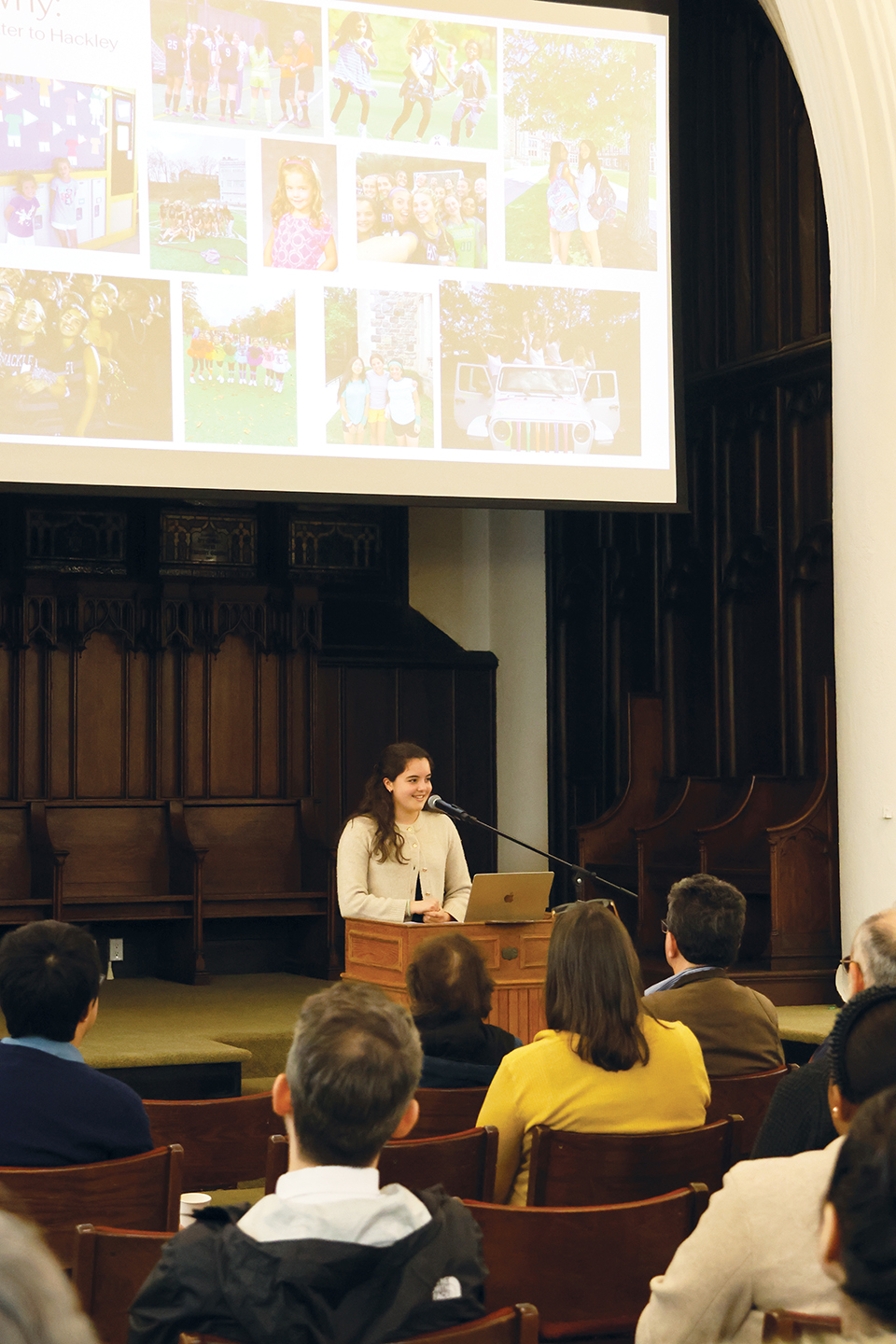 “It took a lot of coordination to get it done,” adds DeMarchena. “Annika built out this PD workshop for the Lower, Middle and Upper Schools, thinking about how disability awareness and advocacy look in each division and understanding that it would be very different with the operators, both the students and the teachers as operators. So, she made three different presentations and delivered them to resounding success. She received so much praise from different individual teachers reaching out to her in all the divisions.”
Annika’s presentations aimed to deepen employees’ use of inclusive language when working with students with disabilities while equipping faculty with practical strategies to support all learners. Such tools as the PALS framework (pause, acknowledge/ask, listen and share) provided accessible, actionable guidance for faculty to carry forward into their interactions with students. The discussions created space for teachers to reflect on their own practices and questions, fostering a genuine appetite for continued conversation and professional growth.
“I don’t think it’s common for students to talk to them because it’s kind of scary to go in front of your teachers,” Annika adds. “And for me, I’m a Lifer, so I’ve been taught by a lot of the teachers here. Across the divisions, all the teachers were super willing participate. I was just appreciative that they were so willing to discuss and share their personal stories and be vulnerable. They were open-minded about it, which is all I could ask for.”
Next steps include a presentation to this year’s service-leadership students. “It’s just been a tremendous thing to see from soup to nuts her ideation, execution and just how amazing this is,” adds DeMarchena.
And for Annika, this work doesn’t stop once she departs the Hilltop this June. “The major that I’m planning on doing at Michigan is called ‘Law, Justice and Social Change.’ I want to hopefully do something in the social impact world, maybe go to law school and work in human rights law or something like that. I think that’s super interesting work. So, it’s definitely not just a one-time thing for me.”